Tokai
Suite 404Melomed Tokai Private Hospital
Tokai, Cape Town
Melomed Tokai and Melomed Bellville
Dr. Atwaru is a Spinal Orthopaedic Surgeon with interests and training in minimally invasive spine surgery, endoscopy, pain procedures, arthroscopy, arthroplasty, trauma and sports medicine.
Deep specialisation rather than a long list. Each of these is work Dr. Atwaru performs regularly, not an occasional referral.
Operative and non-operative management of spinal conditions, from degenerative disease to deformity and injury.
Techniques that reduce tissue disruption, shorten hospital stay and speed the return to ordinary movement.
Surgery performed through a working endoscope, the least disruptive route currently available for suitable spinal conditions.
Hip and knee arthroplasty for joints worn by arthritis, trauma or long-term wear, restoring movement and settling pain.
Fractures and acute musculoskeletal injury, managed from the emergency presentation through to rehabilitation.
About
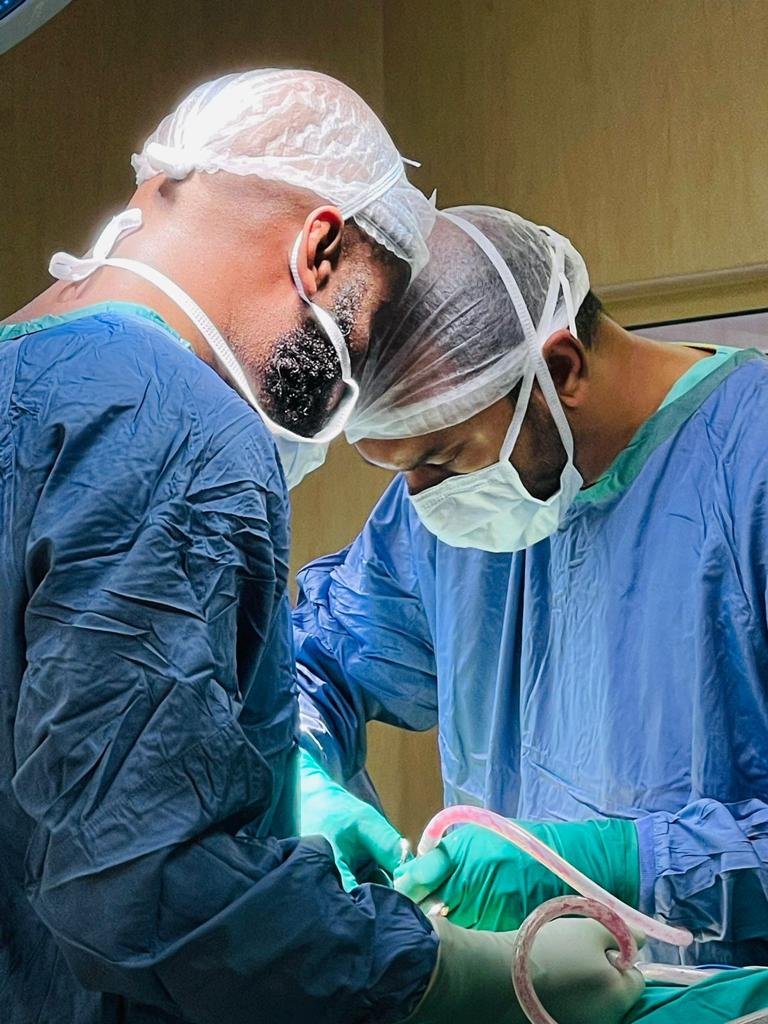
Dr. Atwaru is a specialist orthopaedic and spinal surgeon practising at Melomed Tokai and Melomed Bellville, with particular interests in sports medicine and arthroplasty. He offers both operative and non-operative treatment for spinal conditions.
He keeps pace with surgical advances through local and international conferences, and will tell you plainly when an operation is not the right answer.
To give real service you must add something which cannot be bought or measured with money, and that is sincerity and integrity. The practice's guiding principle
Most people come for the same reason: pain that no longer responds to anything else. A successful joint replacement takes that pain away, restores the movement arthritis had slowly removed, and gets people back to walking, driving, working and playing sport. More than 95 percent of patients get meaningful, lasting relief, and modern implants are built to keep performing for many years.
The hip is a ball-and-socket joint with a large range of movement. A total hip replacement is undertaken when the natural hip has become problematic through arthritis, trauma or collapse of the femoral head. Surgery is recommended where constant pain and stiffness limit daily activities and reduce quality of life. The worn ball is replaced with a prosthetic one, and the socket is lined with a prosthesis to restore motion and remove pain.
Hip replacement is one of the most reliable operations in medicine, and the great majority of patients do very well. As with any surgery there are possible complications, and the rate is low, around 1 to 2 percent. The more common ones are bleeding during surgery, fracture of the femur or pelvis, blood clots in the leg veins, and infection. Each is actively managed. Blood-thinning medication is used to reduce clot risk, for example. Your surgeon will go through all of these with you beforehand.
We aim to make the surgery as comfortable and pain-free as possible. The anaesthetist will agree a pain management strategy with you that suits your procedure and your circumstances.
Follow the instructions given to you by your surgeon, your physiotherapist and your occupational therapist. Leave the wound undisturbed as directed and keep to your rehabilitation programme.
Hip replacement is usually very successful, second only to cataract surgery in the whole field of medicine. More than 95 percent of patients get meaningful relief.
Modern surgical technique aims to get patients home and back to function as soon as possible. The usual hospital stay is two to three days.
Most patients manage on crutches after a hip replacement, typically for four to six weeks. A smaller number will need a walker instead.
Ideally you complete pre-habilitation first, building strength before the operation. Rehabilitation then begins very soon after surgery itself.
Appointments are arranged by telephone. Call the rooms and reception will place you at whichever is closer.
Supported medical aids







Appointments
Monday to Friday, 08h00 to 17h00. For anything outside those hours, email the practice and reception will respond the next working day.
drrm.atwaru@gmail.com